- Benzinga Tech Trends
- Posts
- Goodbye Choice, Hello Monopoly?
Goodbye Choice, Hello Monopoly?

Benzinga Tech Trends
December 09, 2025

If you thought the streaming wars were cooling off, think again. Hollywood’s biggest players are back on the battlefield, wallets out, lawyers ready, and regulators already raising eyebrows.
And right in the center of the storm is Netflix, which just made its boldest move yet — one that could reshape Hollywood, Washington, and your monthly streaming bill.
The company agreed to acquire Warner Bros. Discovery’s film and TV studios and its Max streaming business in a massive $72 billion cash-and-stock deal.
The combined assets carry an enterprise value of $82.7 billion and, if everything goes right, the merger could close in 2026, after WBD spins off its television networks.
That timeline comes with a big, flashing asterisk: regulators must let it happen — and that’s where the plot thickens.
A Blockbuster Deal Meets A Washington Cliffhanger
The moment the news broke, regulators and lawmakers pounced. This deal requires a Hart-Scott-Rodino filing and a full Department of Justice review, and both Republicans and Democrats are signaling they’re ready for a fight.
A Trump administration official told CNBC that they view the proposal with “heavy skepticism,” adding more political weight to a process that was already primed for conflict.
President Donald Trump himself went a step further. Speaking on the red carpet at the Kennedy Center Honors, the president revealed plans to be “involved in that decision,” noting the combined streamer could command a “very big market share.”
Trump even praised Netflix co-CEO Ted Sarandos — then immediately warned the deal “could be a problem” depending on what economists find.
It’s not every day a president teases direct involvement in a tech-media merger, but this one appears to have Washington’s full attention.
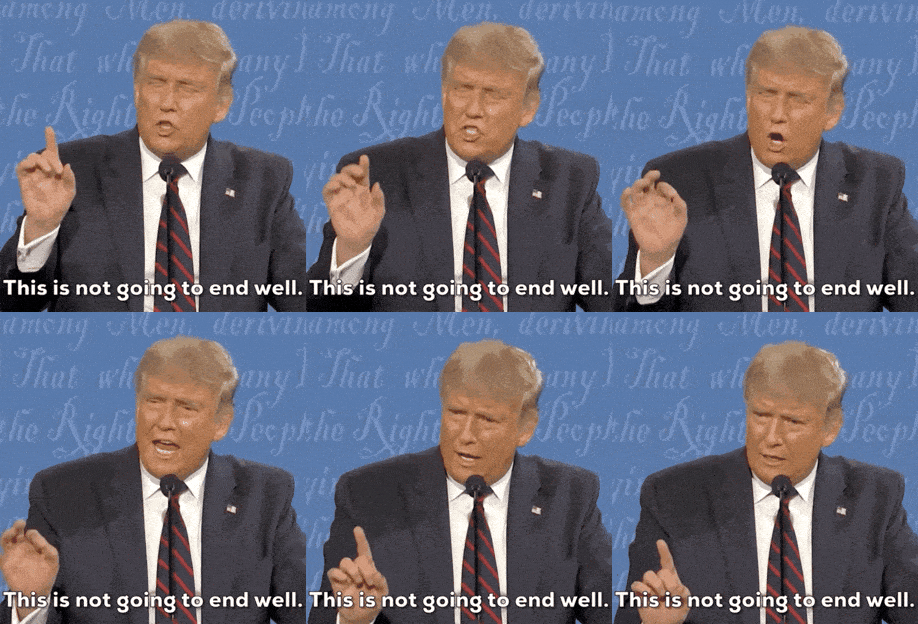
Gif by cbsnews on Giphy
The Antitrust Alarm Bells Are Ringing — Loudly
Lawmakers, including Sen. Elizabeth Warren and Sen. Mike Lee, argue the deal could create a streaming giant with potentially half the U.S. market.
They warn it could limit content choices, squeeze competitors, spike subscription prices, and threaten thousands of jobs tied to theatrical production and TV networks.
Entertainment worker unions are also raising alarms, saying consolidation has already strained wages, canceled shows, and reduced bargaining power — and this merger could make things worse.
As for rival bidders, Paramount and Comcast both tried to acquire the same WBD assets but lost out to Netflix.
Paramount’s legal team warned WBD that choosing Netflix could ignite antitrust troubles on both sides of the Atlantic, suggesting regulators may force the companies back to the negotiating table.
Why Lina Khan Is Suddenly Trending Again
Former FTC Chair Lina Khan, whose tenure from 2021 to January 2025 was defined by aggressive antitrust enforcement, is back in the spotlight — at least online.
Under her leadership, the agency challenged mergers, including the Microsoft-Activision deal, and targeted Amazon’s marketplace practices. Many observers argue that her influence still shapes how regulators view Big Tech and that her legal theories could loom over Netflix’s proposed takeover, even though she’s no longer in office.
Commentators say the Netflix-WBD proposal looks a lot like the kind of vertical consolidation Khan aggressively questioned.
Her name trending now reflects a broader concern: if the FTC and DOJ stick to the framework she helped build, Netflix could face years of legal pushback.
Hollywood Loves A Sequel — Even When It’s a Fight
Paramount’s accusations of favoritism, Comcast’s failed pursuit, and bipartisan political backlash all point toward trouble ahead.
The deal might be far from certain.
If approved, Netflix would control a vast library that includes Warner Bros.’ historic film catalog, HBO’s award-winning originals, and Max’s streaming pipeline — a content jackpot unmatched in modern media.
But getting to the finish line will require navigating a political and regulatory gauntlet that no streamer, not even Netflix, has faced before.
The Credits Aren’t Rolling Anytime Soon
For consumers, this could mean more exclusive content under one roof — or higher prices and fewer choices if competition dries up.
For Hollywood, it could trigger another wave of consolidation as rivals scramble to keep up. And for Washington, it becomes a test of how far regulators are willing to go to curb Big Tech’s ambitions in entertainment.
One thing is clear: Netflix may want everything now, but whether it gets it will depend on months — maybe years — of legal, political, and industry battles. And like any good Hollywood story, the ending is far from guaranteed.
This Week In Tech
Apple's Potential Rally
Wall Street Bull and Wedbush Securities Managing Director Dan Ives has increased his price target for Apple Inc. to $350, indicating a potential upside of approximately 26% from current trading levels. The bullish revision is attributed to stronger-than-expected sales of the iPhone 17 and Apple's accelerating momentum in artificial intelligence (AI).
Bieber's iPhone Annoyance
Pop icon Justin Bieber has voiced his dissatisfaction with a design feature on Apple's iPhone. Bieber expressed his annoyance with the dictation button on Apple iPhones, stating that the text-to-speech feature is often accidentally activated, disrupting his music.
Trump's Netflix-Warner Bros. Involvement
President Donald Trump has announced his intention to play a direct role in the federal review of Netflix Inc.'s takeover of Warner Bros. Discovery. Trump praised Netflix's co-CEO, Ted Sarandos, but also noted that the merged company's large market share could potentially be a problem.
Meta's Metaverse Cuts
Wall Street analysts have rerated Meta Platforms Inc after the company announced that it is considering cutting up to 30% of its 2026 Metaverse budget. The cuts primarily target the Quest virtual reality unit and Horizon Worlds, which account for the bulk of metaverse-related investment.
Amazon's AI Demand
Despite some of the most bullish AI commentary yet, investors seem unmoved even as Amazon.com Inc. insists demand for artificial intelligence (AI) infrastructure is "skyrocketing." Gene Munster, managing partner at Deepwater Asset Management, suggests that the market is largely brushing off Amazon's increasingly confident outlook on AI.
That's all for this week! If you found these updates useful, you'll like more from this newsletter. Get deeper dives, hot takes, and all the latest tech news delivered straight to your inbox.